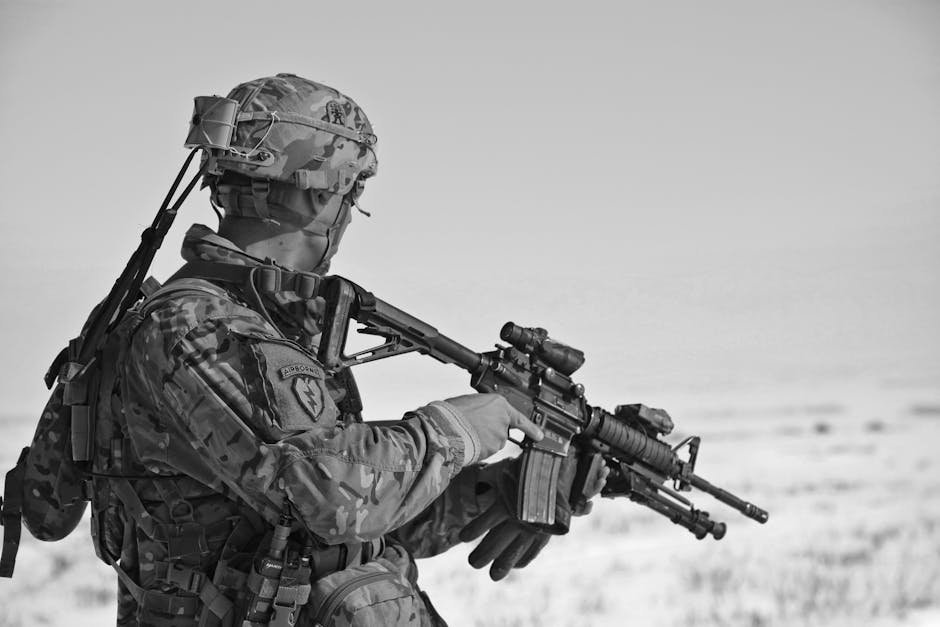
The world of military terminology can feel like a labyrinth of acronyms, specialized jargon, and nuanced distinctions. Among these, understanding the Distinction: 'Soldado' vs. Related Military Terms is more than an academic exercise; it’s key to grasping the varied global landscape of armed forces and the intricate communication within them. From official doctrines to the casual banter in a chow hall, every word carries weight, shaping perceptions and conveying critical information.
This article peels back the layers of military language, offering a comprehensive guide to why these distinctions matter, how they function, and what they reveal about the unique cultures of service. We'll explore everything from the official dictionaries that govern global operations to the evolving slang that builds camaraderie in the trenches.
At a Glance: Unpacking Military Terminology
- 'Soldado' is Spanish for 'soldier,' emphasizing its specific cultural and linguistic context, distinct from the broader English term.
- Military language serves dual purposes: It ensures precision in high-stakes environments and builds deep camaraderie among service members.
- Terms are categorized: from formal, globally recognized definitions (like those in the DOD Dictionary) to highly informal, branch-specific slang.
- Understanding the nuance: Differentiating between "soldier," "servicemember," "Marine," or "Airman" reflects respect and knowledge of specific roles.
- Slang reveals culture: Jargon, humor, and nicknames offer insights into the daily life, challenges, and shared experiences of military personnel.
- Language evolves: Terms change over time, adapting to new conflicts, technologies, and social dynamics.
Beyond the Battlefield: Why Military Language Matters
You might wonder why a deep dive into military nomenclature is necessary. After all, isn't a soldier just a soldier? Not quite. The sheer volume and specificity of military language reflect its crucial role in operations and culture. The U.S. military, for example, relies on a vast lexicon, meticulously cataloged in resources like the DOD Dictionary of Military and Associated Terms. This isn't just bureaucratic red tape; it's a foundational document ensuring that when a U.S. Army unit communicates with a U.S. Navy vessel or an Air Force contingent, they're speaking the exact same operational language.
But beyond formal definitions, military language—often laden with jargon and slang—serves another vital purpose: building camaraderie. This "insider" language creates a shared identity, a shorthand understood only by those within the service. It’s a tapestry woven with abbreviations, acronyms, and nicknames, often direct, sometimes tinged with dark humor, and always reflecting the unique culture of the armed forces. It varies by region, evolves with time and missions, and forms an unbreakable bond among those who serve.
Deconstructing 'Soldado': A Global Perspective
Let's begin with the term that anchors our discussion: 'Soldado.' At its core, 'soldado' is simply the Spanish word for "soldier." However, its significance extends beyond a mere translation. When we discuss the very meaning of 'soldado' the very meaning of 'soldado', we're acknowledging a specific linguistic and cultural context. It’s the term used in Spanish-speaking countries to refer to a member of their armed forces, whether in the army, navy, or air force, though it most commonly evokes an image of an army ground combatant.
In many parts of Latin America and Spain, 'soldado' carries a historical and cultural weight that mirrors, but also diverges from, the English "soldier." For instance, a "soldado raso" specifically denotes a private, the lowest rank, much like a "grunt" or "infantryman" in informal U.S. military parlance, but without the pejorative connotations. Understanding 'soldado' requires appreciating that military terminology isn't universal; it's steeped in national history, local dialects, and the specific structure of each nation's armed forces.
The English Counterparts: "Soldier," "Servicemember," and Beyond
While 'soldado' points to a specific linguistic context, English offers a broader, more segmented vocabulary for military personnel. Navigating these distinctions is crucial for respectful and accurate communication, particularly when interacting with U.S. military members or discussing their roles.
"Soldier": Specifically Army
In the U.S. context, "soldier" is primarily and officially used for members of the U.S. Army. You'll hear terms like "Joe" (shortened from G.I. Joe) or even "11 Bullet Catcher" for an Army infantryman, illustrating the branch-specific nature. Referring to a Marine as a "soldier" is a common civilian mistake that can often be met with correction, as it erases their distinct identity.
"Servicemember": The Inclusive Umbrella
This is the most accurate and respectful umbrella term for anyone serving in any branch of the U.S. armed forces. It encompasses:
- Soldiers: U.S. Army
- Marines: U.S. Marine Corps (often called "Self-Propelled Sandbags" by some, a term that ironically highlights their front-line fighting role)
- Sailors: U.S. Navy (sometimes derisively referred to as "Puddle Pirates" by other branches, despite operating on the world's oceans)
- Airmen: U.S. Air Force (or "Zoomies" to non-flying personnel)
- Coast Guardsmen: U.S. Coast Guard (informally "Puddle Pirates" or "Uncle Sam's Canoe Club")
Each branch has its unique culture, training, and missions, and their chosen nomenclature reflects this identity. Using "servicemember" when you're unsure of their specific branch is always a safe and respectful choice.
Navigating the Lexicon: Formal vs. Informal Military Terms
The rich tapestry of military language extends far beyond basic titles. It bifurcates into highly formal, standardized terms and a vibrant, ever-evolving informal lexicon of slang and jargon.
The DOD Dictionary: The Official Playbook
For the U.S. Armed Forces, the DOD Dictionary of Military and Associated Terms is the definitive source for standardized terminology. It ensures clarity and common understanding across joint operations involving multiple branches, and even with allied nations. These terms are precise, often technical, and critical for planning, execution, and reporting.
Think of terms like:
- Demilitarized Zone (DMZ): An area where military force is strictly prohibited.
- Force Projection: A nation's ability to extend its military power beyond its borders.
- Weapons of Mass Destruction (WMDs): Nuclear, biological, chemical, radiological, and high-yield explosive weapons.
- Joint Operation Planning: The coordinated planning involving multiple military forces for complex operations, from mobilization to sustainment.
These terms leave no room for ambiguity, which is paramount in situations where misinterpretation could have dire consequences.
The Unofficial Language: Slang, Jargon, and Nicknames
Away from the formal briefing rooms and policy papers, military personnel communicate with a rich, colorful, and often humorous informal language. This slang is functional, fostering internal cohesion and acting as a coping mechanism.
1. Branch-Specific Identities:
Each branch boasts its own unique set of informal identifiers, often born from internal humor or rivalries:
- Army: Besides "11 Bullet Catcher" for infantry, you might hear "Trench Monkey" as a derogatory term for an Army member, highlighting their ground-pounding role.
- Air Force: "Rotorhead" specifically denotes a helicopter pilot, while a fixed-wing pilot might be called a "Flight Suit Insert." "Bitchin' Betty" refers to the female-voiced warning systems in aircraft, adding a personal touch to critical alerts.
- Navy: "Gum Shoe" is a cryptology technician, a term with historical roots. "Crank" is a sailor on temporary galley duty, implying a less desirable, temporary role.
- Marines: "Remington Raider" is a derogatory term for Marines performing office duties, a jab at those not on the front lines, reflecting the Marine Corps' combat-centric culture.
2. Operational Shorthand:
Many slang terms emerge from the need for quick, efficient communication in high-stress environments: - FOB (Forward Operating Base): A base larger than a smaller Combat Outpost (COP), offering more resources and comforts.
- IED (Improvised Explosive Device): A universally understood acronym for the dangerous, often homemade bombs used by insurgencies. To be "blowed up" is to be hit by one.
- Dust-off: A critical term for a medical evacuation by helicopter, implying urgency and life-saving action.
- Klicks: Simple shorthand for kilometers, crucial for communicating distances quickly.
- Tango Uniform: Military alphabet for "tits up," meaning something is dead, broken, or completely messed up.
3. Cultural Expressions:
Slang often reflects the shared experiences, frustrations, and dark humor inherent to military life: - Alpha Charlie: Military alphabet for "ass chewing," meaning a severe verbal reprimand.
- Blue Falcon: A euphemism for "buddy ***," referring to a backstabber or someone who undermines their comrades.
- Soup Sandwich: Describes an individual, object, situation, or mission that has gone horribly wrong, often used with a sense of exasperation.
- Voluntold: An assignment that is technically "voluntary" but understood by everyone to be mandatory.
- Goofball Terms for Recruits: Terms like "Chem-Light Batteries" or "Left-Handed Monkey Wrench" are mythical, functionally pointless objects that new privates are often sent to find, a classic initiation prank.
4. Humor and Dark Wit:
Military life is tough, and humor often serves as a coping mechanism. - "Officer's Candy": Scented cakes found in urinal troughs in the Navy, a darkly humorous observation.
- **"Flaming **hole": The fiery effect of a jet plane's afterburners, a vivid and unvarnished description.
- "Pink Mist": A grim, yet stark, description of the effect of certain gunshot wounds.
- "S* on a Shingle":** A classic, unappetizingly named military dish of toast with gravy.
The Evolution of Terms: From 'Band-Aid' to 'Blowed Up'
Military language is not static; it's a living, breathing entity that evolves with time, technology, and conflict. Terms popular in one era might fade, while new ones emerge from the crucible of current events.
For instance, the term "Band-Aid" was common during the Vietnam era to refer to a medic. Today, while still understood, it's less prevalent than more modern slang or the official "corpsman" (Navy) or "combat medic specialist" (Army). Similarly, phrases like "Dear John," referring to a breakup letter from a significant other, are rooted in an era of handwritten correspondence, though the sentiment remains timeless.
Recent conflicts in Iraq and Afghanistan gave rise to specific terminology. "Sandbox" became a widespread, informal term for desert areas like Iraq or Kuwait. The ubiquitous threat of IEDs led to terms like "blowed up" to describe being hit by one. Even the formal operations were colloquially abbreviated, like "OEF" for Operation Enduring Freedom (Afghanistan) and "OIF" for Operation Iraqi Freedom, quickly becoming part of the daily lexicon. This constant adaptation underscores the organic nature of military language.
Why Precision in Terminology is Your Ally
Beyond mere semantics, understanding these distinctions offers tangible benefits:
- Avoiding Miscommunication (and Offense): In a civilian context, calling a Marine a "soldier" might seem innocuous, but it demonstrates a lack of understanding that can be perceived as disrespectful. In an operational context, misunderstanding a term like "First Light" (nautical twilight, 12 degrees below the horizon) versus actual sunrise could lead to tactical errors.
- Showing Respect and Empathy: Using the correct titles or demonstrating knowledge of branch-specific nuances shows that you've taken the time to understand their world. It opens doors to more meaningful conversations and builds trust.
- Gaining Deeper Insight: Recognizing slang like "Blue Falcon" or "Fugazi" provides a window into the challenges, frustrations, and dark humor that service members use to cope. It humanizes the experience beyond the uniforms and official reports.
- Navigating Information Critically: When consuming news or historical accounts, an awareness of terminology helps you discern official narratives from personal experiences, and understand the specific context of events. For instance, knowing what a "Bull**** Bomb" (a package dispersing propaganda leaflets) is tells you something about a specific type of psychological operation.
Beyond the Dictionary: Understanding the Subtext
Many military terms carry a subtext that goes beyond their literal definition, revealing rank dynamics, shared hardships, or cultural values.
- Status and Transition: A "Mustang" is an officer who was promoted from the enlisted ranks. This term can be used respectfully, acknowledging their unique journey, or sometimes pejoratively, implying they still retain some "enlisted" habits. Similarly, a "Shavetail" is a second lieutenant, a term with roots in newly broken pack animals, subtly hinting at their inexperience.
- Shared Experience: "Ruck Up" means to endure a challenging or stressful situation, a direct reference to the physical burden of a "ruck sack" (backpack) on long marches. "Groundhog Day" aptly describes deployments that repeat in the same monotonous way, despite efforts to change them.
- Performance and Perception: "High Speed" describes a highly motivated and effective individual, though it can also be used sarcastically. Conversely, "Ate-Up" can describe someone who is either rigidly adhering to regulations without sense or completely misunderstanding them – a truly screwed up situation.
- Rituals and Traditions: "Pollywog" (a sailor who hasn't crossed the equator) and "Shellback" (one who has) are terms associated with ancient naval traditions, marking rites of passage and a shared history within the Navy.
Your Guide to Respectful and Accurate Communication
Navigating military terminology, whether as a civilian, a journalist, or a new recruit, requires a blend of curiosity, respect, and a willingness to learn. Here’s how you can confidently engage with this specialized language:
- Start Broad, Then Refine: If you're unsure, use inclusive terms like "servicemember" or "military personnel." If you know their branch, use the specific term (Soldier, Marine, Sailor, Airman, Coast Guardsman). If you know their rank and name, that's always the most respectful.
- Listen and Learn: Pay attention to how service members refer to themselves and each other. This is often the quickest way to pick up on appropriate terms and local slang. Don't be afraid to ask for clarification if a term is genuinely confusing; most service members appreciate genuine interest.
- Context is King: Understand that slang like "Charlie Foxtrot" (cluster****) or "Oxygen Thief" (useless person) is typically used internally and might not be appropriate for formal settings or conversations with those outside the military.
- Embrace the Depth: Recognize that every term, whether formal or informal, contributes to the rich cultural fabric of the military. From the functional clarity of a "Unit Identification Code" to the dark humor of a "Latrine Queen," each word tells a story about life in uniform.
By understanding the nuance between 'soldado' and the vast array of related military terms, you gain not just a lexicon, but a deeper appreciation for the discipline, camaraderie, and unique experiences of those who serve around the world. It’s a language that builds bridges, clarifies commands, and solidifies bonds that last a lifetime.